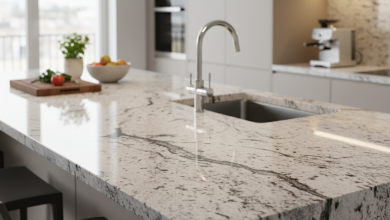
Natural stone worktops—granite, marble, and slate—add undeniable beauty and luxury to any kitchen. However, their porous nature makes them vulnerable to staining, etching, and dulling. Homeowners often panic when a red wine spill or a lemon slice leaves a mark.
The secret to maintaining these surfaces isn’t constant scrubbing; it’s proper cleaning, routine maintenance, and professional sealing. Here are the trade secrets for worktop cleaning and sealing that specialists use to keep stone surfaces in pristine condition.
The fundamental rule: How to clean natural stone worktops
The biggest mistake homeowners make is using everyday kitchen cleaners. Products containing vinegar, lemon juice, or ammonia are acidic and can etch (chemically burn) the surface of sensitive stones like marble, leaving a dull, permanent mark.
To understand how to clean natural stone worktops correctly, follow these rules:
- Use pH-neutral cleaners: Only use cleaners specifically labelled as stone cleaners, or a simple solution of mild soap and water.
- Immediate cleanup: Wipe up spills, especially acidic ones like juice or wine, immediately. The longer they sit, the deeper the stain will penetrate.
- Avoid abrasives: Never use abrasive pads, scouring powder, or steel wool, as these will scratch the surface and wear down the protective sealant.
Protecting your investment: Why you need a sealing service
Granite, marble, and slate are porous, meaning they absorb liquids. Sealing fills these microscopic pores, creating a barrier that prevents stains from sinking in. Even granite, which is dense, needs re-sealing every one to three years.
You should hire a professional for a granite worktop sealing service to ensure the job is done properly with commercial-grade impregnators. Attempting to seal your stone incorrectly can leave a hazy residue that is difficult to remove.
It is essential to use a trustworthy professional for this delicate work. Rated People’s cleaners are reviewed by homeowners just like you, giving you confidence that your stone worktop will be protected correctly, not damaged.
Sealing slate and marble: Expert trade tips
Different stones require different approaches. Professionals have specific sealing slate floor tiles trade tips and techniques for marble:
- Marble: Marble is highly susceptible to etching. A specialist will often recommend a penetrating sealer, which soaks into the stone, rather than a topical sealer, which just sits on the surface.
- Slate: Slate is naturally very absorbent. For a high-shine finish, a sealer with an enhancing formula may be chosen to deepen the colour. For floors, a hard-wearing sealer is crucial to resist abrasion.
Choosing the product
The best stone sealer for kitchen countertops is one that is a high-quality, professional-grade product that offers a long lifespan and won’t discolour the stone. Your contractor will choose the right type based on the stone and its location.
Restoration: When damage occurs
If your stone is badly stained, scratched, or etched, you may need a restoration service. This is a job that requires specialised machinery, such as diamond-impregnated polishing pads, to remove a thin layer of stone and restore the original finish.
For this type of work, costs are generally higher than routine cleaning and sealing. Restoration work may involve:
- Honing: Removing deep scratches and marks.
- Polishing: Buffing the stone to the desired level of shine.
- Filing: Repairing chips in the edge of the worktop.
With Rated People, you have the power to get it done. Find a trusted, local tradesperson today.